CBT-I
Sleep apnoea and insomnia: two conditions that are easily confused and often go together
Among people who seek help for insomnia, a significant proportion also have sleep apnoea, often without knowing it. And among people treated with CPAP, many still struggle with insomnia even though their machine is working well.
A common combination
An estimated 30 to 50% of people with sleep apnoea also have insomnia. Each condition feeds the other. Treating the apnoea with CPAP often improves sleep, but the behavioural insomnia underneath can persist and needs its own CBT-I treatment.
Sleep apnoea: a quick recap
Obstructive sleep apnoea (OSA) means that breathing stops again and again during sleep, because the muscles of the upper airway relax. Each pause triggers a brief arousal, usually without you noticing, which breaks up your sleep and robs it of its most restorative stages.
Warning signs to look out for:
- Loud, regular snoring
- Pauses in breathing noticed by your bed partner
- Waking up gasping or with a dry mouth
- Severe headaches in the morning
- Excessive daytime sleepiness, a risk when driving
- Nocturia (getting up repeatedly at night to pass urine)
- Feeling tired on waking despite enough hours in bed
Sleep apnoea is diagnosed with polysomnography or respiratory polygraphy. If several of these signs sound familiar, talk to your doctor.
Clinical differences: insomnia vs sleep apnoea
This table is only a guide. A health professional is the right person to point you in the right direction:
| Symptom | Insomnia | Sleep apnoea |
|---|---|---|
| Difficulty falling asleep | Common | Less typical |
| Waking at night | Common | Common (often unnoticed) |
| Daytime sleepiness | Rare (hyperarousal) | Common |
| Snoring | Not specific | Common |
| Morning headaches | Sometimes | Typical |
| Observed pauses in breathing | No | Important sign |
| Tired despite enough sleep | Possible | Typical |
Treating sleep apnoea: CPAP
CPAP (continuous positive airway pressure) is the standard treatment for moderate to severe sleep apnoea. You wear a nasal or full-face mask connected to a machine that delivers a gentle, constant flow of air, which keeps your airway open while you sleep.
When people get on well with it, CPAP can be life-changing. But sticking with it remains a major challenge, and this is exactly where insomnia comes in.
When CPAP works well
- Less daytime sleepiness
- Better blood pressure
- Lower cardiovascular risk
- Good-quality sleep again
What gets in the way
- A mask that is uncomfortable or makes you anxious
- A feeling of claustrophobia
- Noise from the machine
- Air pressure that makes it hard to fall asleep
When insomnia comes on top of sleep apnoea
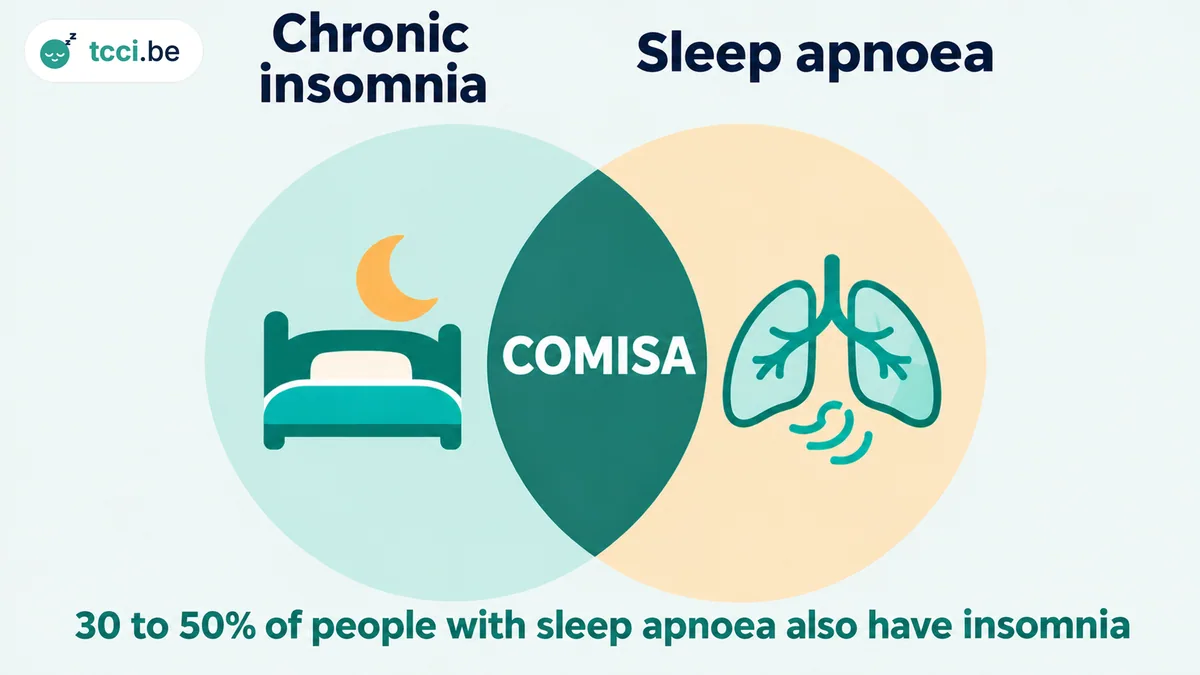
Sleep apnoea can trigger or worsen insomnia
Over time, the repeated awakenings caused by apnoeas set up a classic negative conditioning: the bed becomes linked with being awake, with discomfort, even with anxiety. This conditioning sometimes persists even after the apnoea has been treated effectively. So someone can have their apnoea fully controlled by CPAP and still suffer from insomnia, because the insomnia has taken hold in the meantime as a problem in its own right.
CPAP itself can cause insomnia
The mask, the air pressure, the noise of the machine, the feeling of being closed in: all of this can make bedtime a source of anxiety. Some people come to dread putting the mask on, and that dread in turn delays sleep or stops it altogether.
30-50%
of people with sleep apnoea also have insomnia
-↓
Lower CPAP tolerance when apnoea and insomnia occur together
+↑
Better CPAP adherence once the insomnia has been treated
Where CBT-I comes in
For insomnia alongside treated sleep apnoea
Main indicationIf your apnoea is treated with CPAP but you still have insomnia, CBT-I is clearly indicated. It tackles the behavioural and cognitive mechanisms of insomnia, which exist regardless of the apnoea, using the same techniques as for any other chronic insomnia.
To help you get on with CPAP
Complementary approachCBT-I can help people who find it hard to get used to the mask. It works on catastrophic thoughts about the mask, avoidance behaviours, anticipatory anxiety at bedtime and coping with the brief awakenings caused by an uncomfortable mask.
While you wait for a diagnosis
Early startIf you are waiting for a polysomnography appointment, starting CBT-I can improve your sleep whatever the final diagnosis turns out to be, and the two treatments can then be coordinated.
CBT-I + CPAP: two treatments that work together
CPAP treats the physical cause of the apnoea. CBT-I treats the behavioural and cognitive mechanisms of insomnia. The two are not in competition: they are designed to work together. Studies show that treating insomnia improves CPAP adherence, and vice versa.
Sleep apnoea and CPAP: further reading
Treating sleep apnoea and insomnia together is complex, but it can transform your nights. With the right professionals and the right tools, most patients get back to good-quality sleep, without medication.
Association Apnée Belgique
associationapnee.be, the sleep apnoea information site Andy Leleux also created, explains the treatments and how they are reimbursed in Belgium, and lists the sleep centres.
Visit associationapnee.beFrequently asked questions
Was this page useful?